EDITOR’S NOTE: Also see a Spanish-language version of this article on CrimsonWire, by Arturo Chafino-Marquez. And see an additional story on CrimsonWire by Karmina Conde.
By Arturo Chafino-Marquez
LAS CRUCES, N.M. — “Go through life assuming everyone is trans,” Katalina Elizabeth Hadfield humorously said to an auditorium of listeners.
Hadfield, a trans woman and an attorney in Las Cruces, would then expand on her statement, emphasizing the importance of keeping an open mind.
“Go through life assuming everyone is different from you,” Hadfield said.
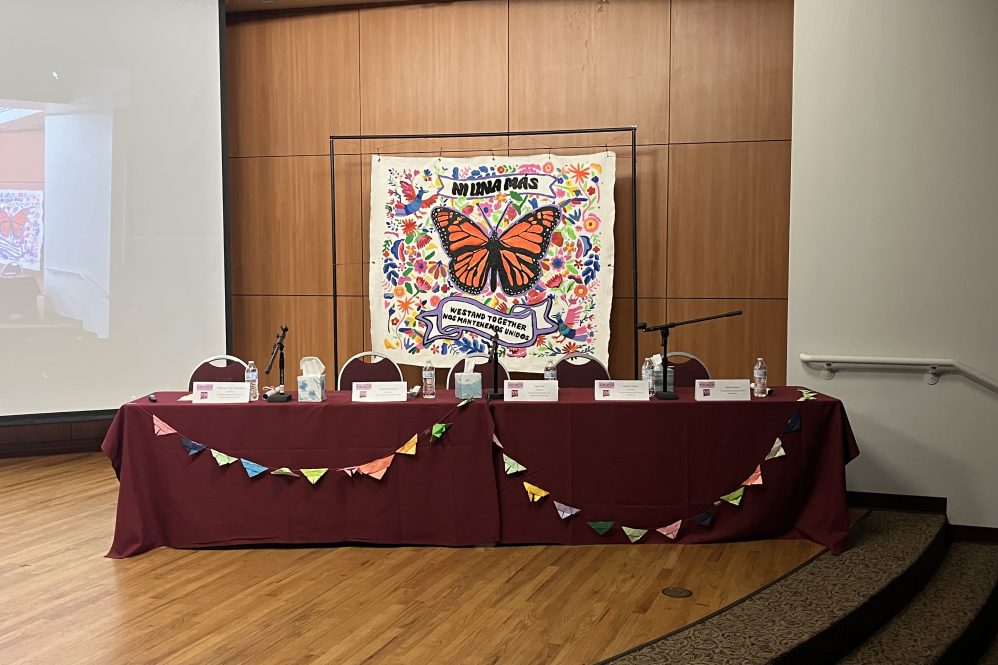
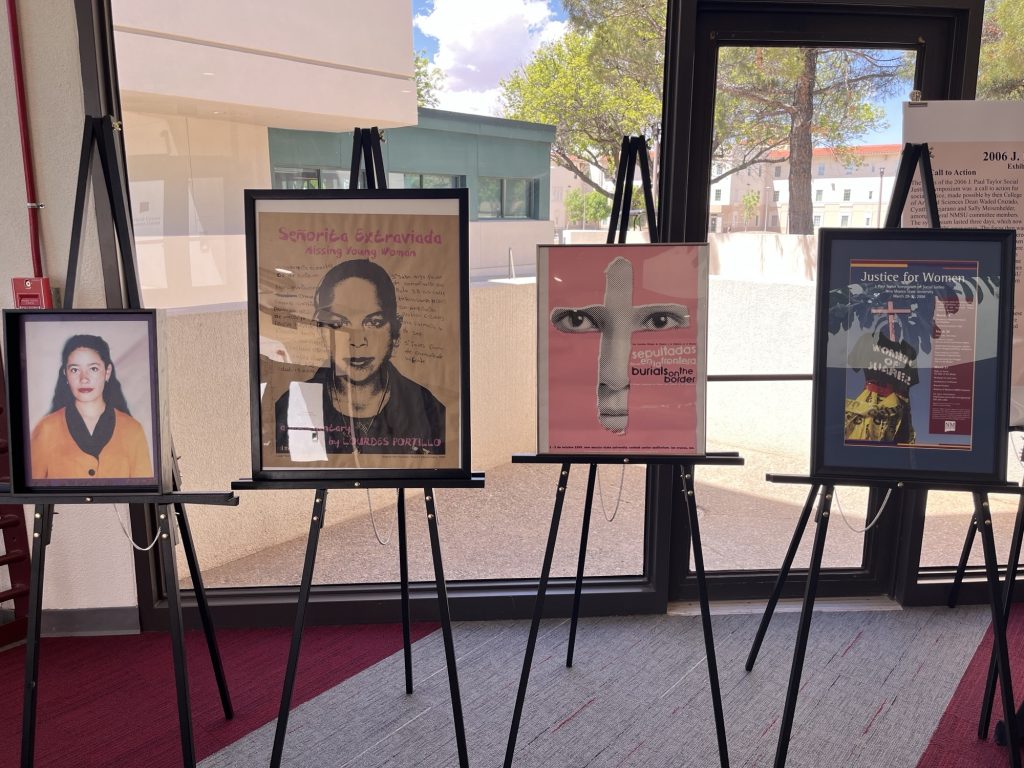
The topic of creating safe and welcoming environments for people of all sexualities and genders was one of the many touched upon during this years J. Paul Taylor Social Justice Symposium, which took place on April 7 and 8 at the Corbett Center Auditorium at New Mexico State University.
The annual event’s focus this year was the fight against feminicide and gender-based violence. Among the many subtopics and panels, the underdiscussed connection between queer experiences and feminicide was given a platform on the second day of the event.
“Feminicide isn’t seen as a specific crime in the U.S., but hate crimes are,” said Vibianno Imanuel Gonzalez, a non-binary student program coordinator for Latin American programs.
Gonzalez, along with the other panelists, was quick to make the connection between insufficient tracking of feminicide in places like Mexico and the similar issue faced in the U.S. with tracking anti-trans violence. Ryan Rox, a trans Latine filmmaker, actor, and HIV prevention educator, singled out the usage of FBI data to discredit hate crimes against trans people. She pointed to the low numbers being explained by a variety of factors, like misgendering or the inability to acknowledge subcontext in many cases.
“People think hate crimes must be black and white, like there’s no nuance,” Rox said.
Aside from a lack of care by the systems in place to acknowledge the issues existence, another connection pointed out was the inherent hatred of women and of feminine traits that motivate this type of violence.
Hadfield identified this hatred of women as not only a key component of the violence itself, but of broader masculinity in society.
“Uncomfortableness with trans women comes from fear of what men can do to women,” Hadfield said.
This rejection of femininity as a staple of toxic masculinity was corroborated by the experiences of Jaxper Sugars, an agender and transmasc person who was worked to support the LGBTQ+ community in New Mexico.
During his transition, Sugars recalled facing a “huge amount of pressure, that I was forced to renounce everything I experienced.”
“LGBTQ people can be affected by feminicide,” Sugars said.


 -
- -
- -
- -
- -
-