By Jeremy Padilla
(EDITOR’S NOTE: For more Jose Lopez photos, see “Jose Lopez Photo Gallery” here at CrimsonWire.org)
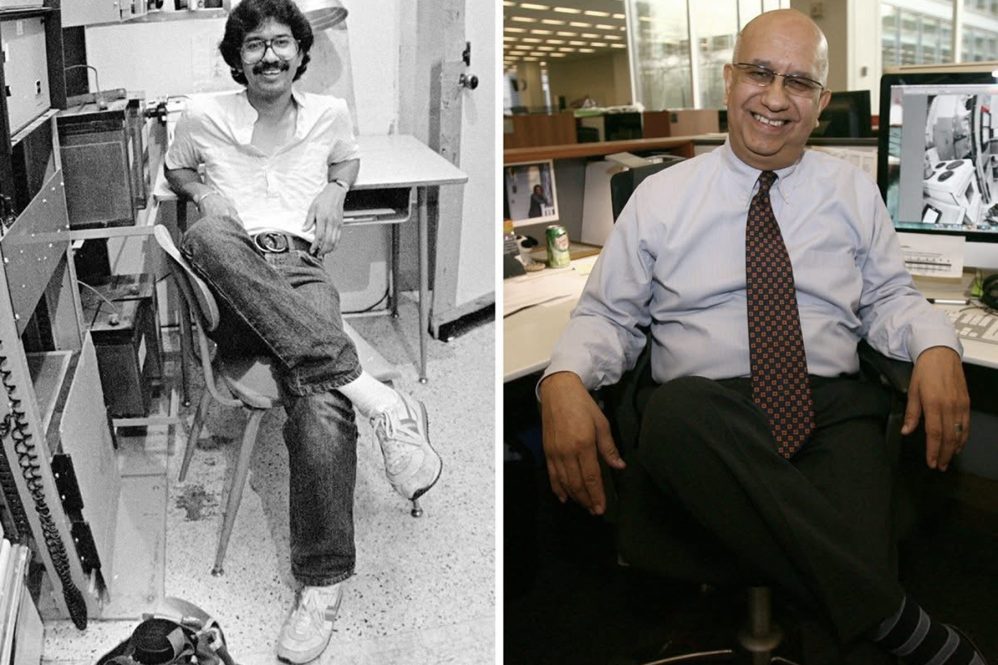
LAS CRUCES, N.M. — “One day that’s going to be me,” Jose Lopez said to his colleagues, as he pointed out the White House press corps in 1977.
Just 10 short years later, Lopez was right. He spent the final three years of Ronald Reagan’s presidency, all four of the George H.W. Bush’s administration and the first two years of Bill Clinton’s presidency as part of the White House press corps.
“This was the dream come true,” Lopez said.
Growing up in Santa Fe, N.M., Lopez originally thought he would follow in his older siblings’ footsteps and become a teacher. While attending Santa Fe High School, he was heavily involved in band when he received a German-made 35mm camera from his father. Lopez took the camera on a band trip to photograph the experience, sparking what would become a lifelong passion for photography.
What truly sealed the deal for Lopez came while he was covering a basketball game between Santa Fe High School and St. Michael’s High School. During the game, a photographer from The Santa Fe New Mexican rushed over to Lopez in a panic after his own photos were ruined and asked if he could use Lopez’s images.
The next morning, Lopez opened the newspaper and saw three of his photos published.
At that moment, he walked into his father’s study and told him, “This is what I’m going to do.”
From there, Lopez enrolled at New Mexico State University where, on the first day of class, a professor introduced him to the department’s Associated Press photo transmitter, which was directly connected to the AP’s Dallas bureau. The professor encouraged Lopez to pursue sports photography, telling him the AP was always looking for someone to cover games and events.
“When I saw that transmitter, I realized this was the key to my future,” Lopez said. “I wasn’t going to let anyone else touch it during the four years I was in college — and I didn’t.”
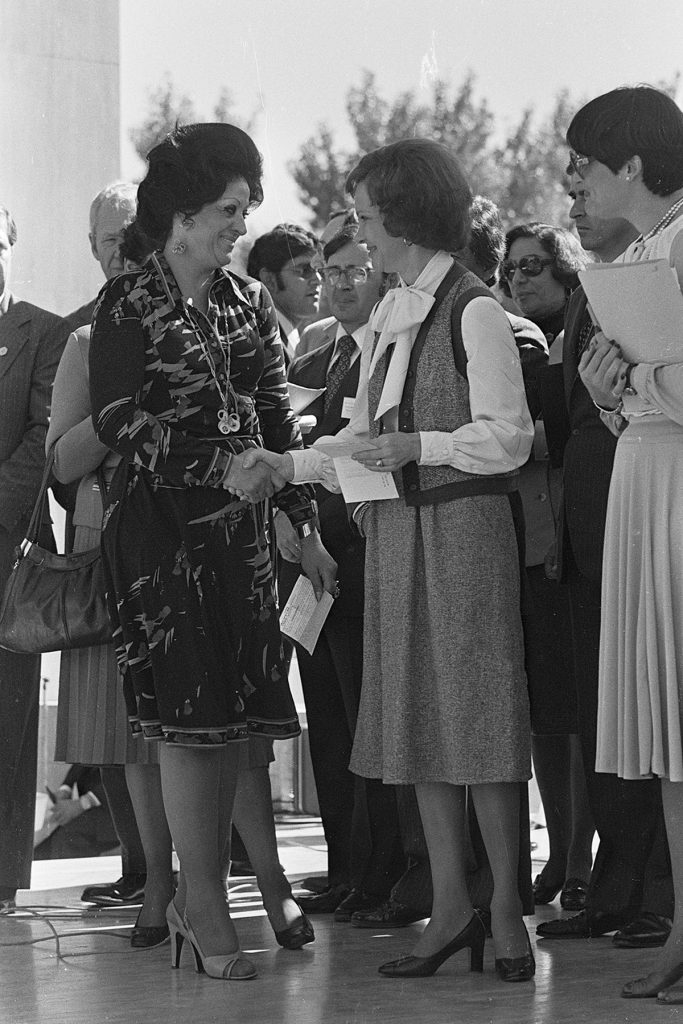
U.S. First Lady Rosalynn Carter met with Carmen Romano de Lopez Portillo, First Lady of Mexico, in a historic November 1977 border visit in El Paso and Juárez, featuring a joint visit to the Museum of Art and History and a Chamizal Memorial concert.
During his time at NMSU, Lopez worked closely with the Dallas AP bureau, building relationships while covering stories across southern New Mexico. One of those assignments included covering a meeting in El Paso between former first ladies Rosalynn Carter of the U.S. and Carmen Romano de López Portillo of Mexico. It was during that event Lopez pointed toward the White House press corps and told his colleagues he one day would work there himself.
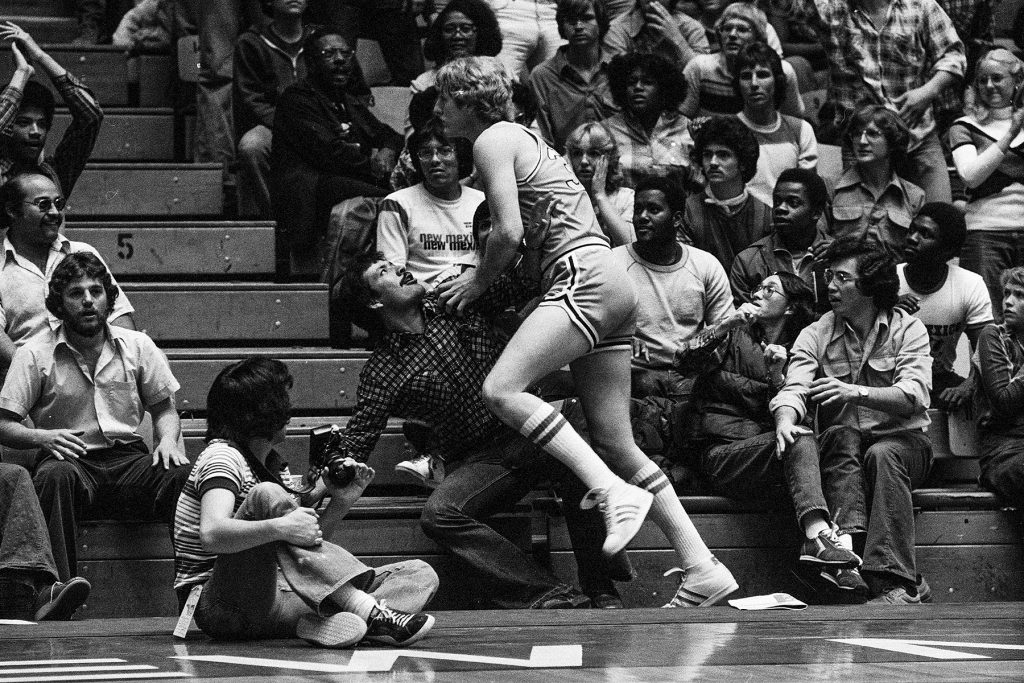
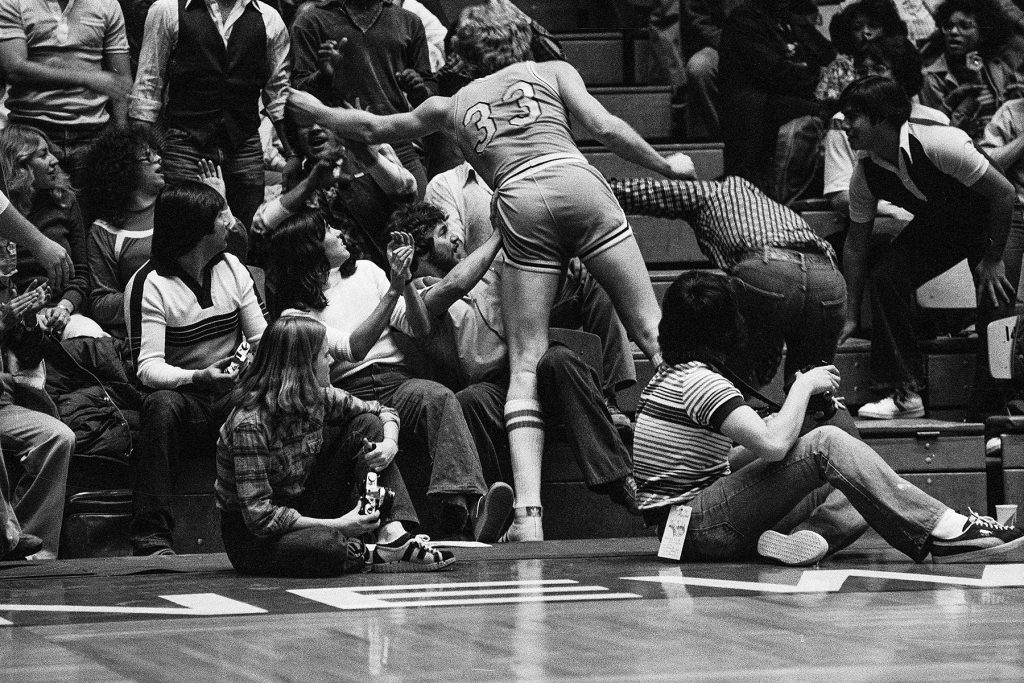
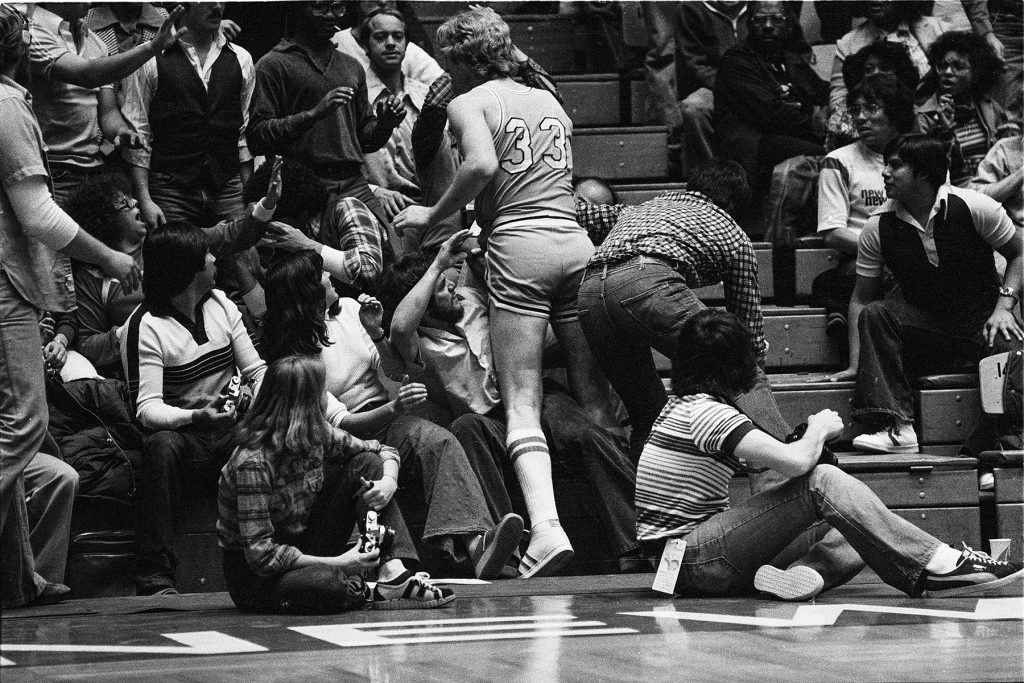
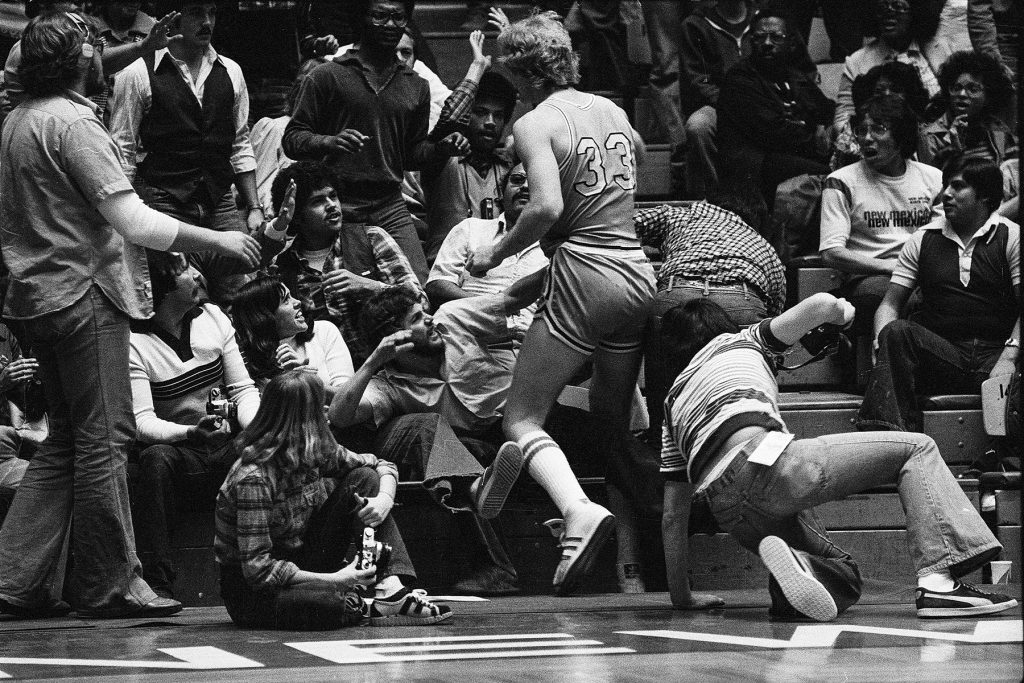
Lopez also covered Project DICE THROW, a large-scale military explosives test at White Sands Missile Range designed to simulate the blast effects of nuclear weapons. Another memorable assignment came when basketball star Larry Bird punched a fan during a game at NMSU.
A recent article written by Keith O’Brien was published on The Ringer talking specifically about the moment.
On February 1, 1979, the No. 2 ranked Indiana State University Sycamores traveled to Las Cruces to take on the Aggies in the Pan American Center. Lopez, a senior at the time, was on call to take a picture of ISU’s star, Larry Bird, not the game. Lopez knew Bird was the story of the game.
Lopez knew he had a deadline because the Indiana and the East Coast newspapers were in a different time zone. With about 7:30 left in the first half Bird was on a fast break where he would lose control, miss the layup and tumble into the crowd of Aggie fans. Bird got caught in a scuffle with fans as he was trying to get back to his feet.
That’s when Lopez’s camera shutter struck. He had caught the sequence of Bird reaching back with his left hand and striking a fan. Lopez knew he had his story and immediately left the game to get the sequence of images to the transmitter in Milton Hall. Although Lopez had his story, the game had another story brewing.
The Aggies had stormed a comeback to take the lead 83-81 and with the three-point shot yet to be introduced, fans in the Pan Am thought they had taken down the unbeaten Sycamores. That is when Bob Heaton, with time expiring, drained a half-court shot to push the game into overtime. Indiana State ended up winning the game 91-89 in overtime.
The story had flipped, no one was talking about Bird and the fan; everyone was talking about Heaton’s miracle shot. As for Lopez, the AP was so impressed with his photos of Bird, the Bureau Chief in Albuquerque was taking a new position at the Albuquerque Tribune and brought Lopez along with him.
Lopez graduated in 1980 and was hired at the Albuquerque Tribune, and within a month of working there, he covered the New Mexico State Penitentiary riot in Santa Fe. Lopez was there for the entirety of the riot, in which 33 prisoners died and more than 90 other inmates and staff were injured.
“Certain things come to you, or fall in your lap, that you recognize you’ve made the right career path,” Lopez said. “I ended up with the largest news story of my life at that time.”
After the riots, Lopez left the Tribune after only three months because he received a job offer at the San Angelo (Texas) Standard-Times and was there until the end of 1980. Lopez’s previous editor was then hired as the executive editor at the Rocky Mountain News in Denver.
He offered Lopez a job.
Lopez accepted and started to cover the Denver Broncos, Denver Nuggets and the Colorado Avalanche.
“The best thing that happened there, it made me a really good sports photographer,” Lopez said.
Lopez understood the task ahead of him and the competition in Denver between the two newspapers, the Rocky Mountain News and the Denver Post.
“It was very competitive,” Lopez said. “It was wonderful, because competition makes you better.”
Lopez stayed with the Rocky Mountain News for four years, leaving in 1984 to work for the New York Times. He stayed there 31 years and enjoyed a career as both a photographer and photo editor. During his years with the New York Times, Lopez was offered a position in Washington, D.C., in which five people declined before Lopez accepted the offer. This was the position that landed him on the White House press corps.
After finishing with the New York Times in 2015, Lopez continued his career with the United States Golf Association as the photo archivist for eight years. He was handling film and glass plate negatives in some cases more than 100 years old, and scanning them and then dropping them into the archive.
Today, Lopez again works with the New York Times, photo editing the national section of the print edition every Monday. More than five decades after first seeing the AP transmitter at NMSU, Lopez is still telling stories through photography.


 -
- -
- -
- -
- -
-