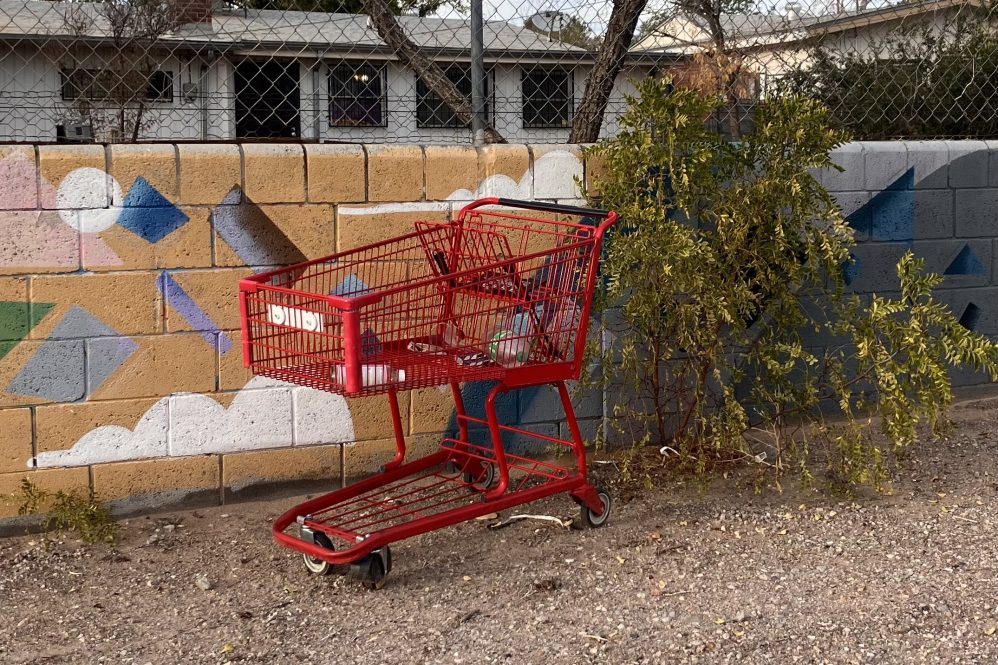
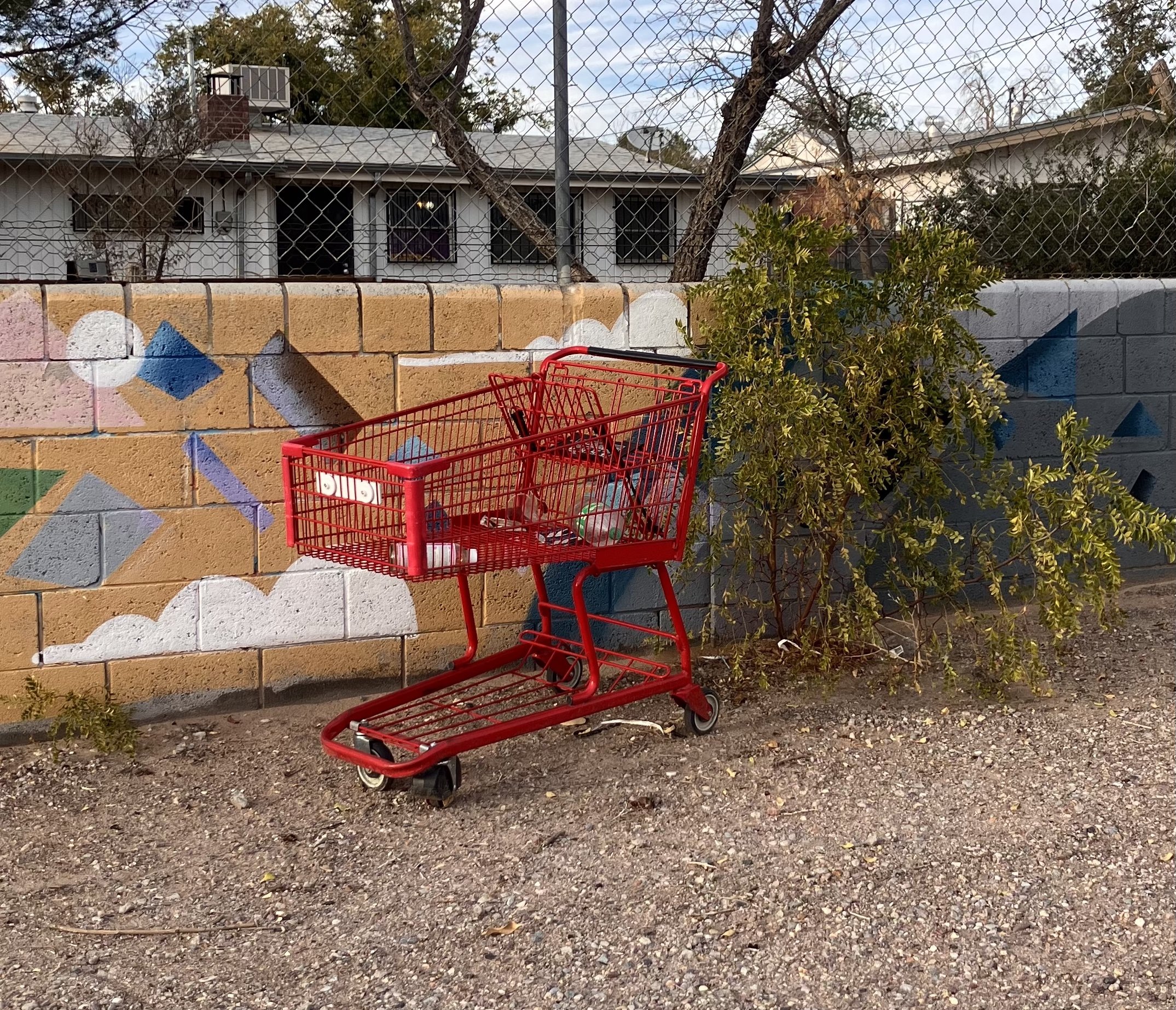
LAS CRUCES N.M. – In August, the Las Cruces City Council passed a controversial Shopping Cart Ordinance by a narrow 4-3 vote. Months later, it is apparent to some that while intended to reduce theft and abandoned carts in the streets, the ordinance actually underscored a deeper issue — the rising number of people who may rely on them due to homelessness.
Ordinance 3079, proposed by Las Cruces Police Chief Jeremy Story, requires businesses to post signs on their premises and shopping carts warning cart theft is a crime. Businesses risk fines of up to $500 for missing carts, while individuals caught with stolen carts face citations.
According to Story, stores lose between $10,000 and $100,000 annually to shopping cart theft. These carts are often abandoned throughout the city and sometimes filled with trash.
“It ultimately bolsters the perception of the problem of homelessness going on in our city,” Story said. “If people think it’s worse than it is, that’s not good for anyone.”
Although the ordinance passed in August, enforcement did not begin until October. During the two-month grace period, Las Cruces Police Department worked to raise awareness about the new law and provided alternatives such as wagons and backpacks for individuals using the carts.
Due to measures being taken before enforcement, there have been no arrests and only eight citations issued since October. Story noted a visible decline in shopping carts on the streets but acknowledged homelessness is still an issue, one he attributes to drugs like fentanyl in the area.
ORDINANCE VOTE
FOR
Mayor Eric Enriquez
Councilor Becki Graham
Councilor Cassie McClure
Councilor Bill Mattiace
AGAINST
Mayor Pro Tem Johana Bencomo
Councilor Becky Corran
Councilor Yvonne Flores
“What I’d like to see in Las Cruces is more options for treatment, both for mental illness and substance use,” Story said. “From our perspective, fentanyl is a huge driver in the increase in homelessness here and across the country.”
However, experts caution linking drug use with homelessness.
Gregg Colburn, co-author of “Homelessness Is a Housing Problem”, points out West Virginia as home to the opioid epidemic. It is also the highest overdose death rate in the United States and has far less homelessness than coastal states. Even larger cities like Chicago report lower homelessness rates than many cities in California, suggesting a more significant factor is at play.
“Homelessness is absolutely solvable,” said Natalie Green, housing and neighborhood revitalization administrator for the City of Las Cruces. “Anyone who does even a small piece of research can see that the way to end someone’s homelessness is ultimately to get them housed.”
However, she acknowledged finding housing is neither a quick nor simple process, and local governments face significant pressure to take action.
“I think that’s what folks are frustrated with—that homelessness exists and they have to see it,” Green said. “The challenge is addressing the visibility while also tackling the root causes.”
According to Green, those root causes include rising rents and the limited availability of affordable housing. She said government investment has failed to scale the level of resources needed to meet the growing need, leaving non-profits to do much of the heavy lifting.
“I’m really appreciative of all of our community partners,” Green said. “They’re great folks who are on the ground doing the real work.”

Organizations such as Mesilla Valley Community of Hope, Families & Youth Innovations Plus and Casa de Peregrinos provide services to people without homes. These groups, however, face challenges, including long waitlists and staffing shortages, highlighting the critical need for government support.
Back in August, Councilmember Cassie McClure recognized this need and wrote an article expressing her doubts before voting in favor of the ordinance. One “yes” made all the difference in its passing, but McClure left the public with a promise.
“I’m not going to tell you to trust us; in fact, I’d like to see you hold us accountable in case this doesn’t work,” McClure wrote. “The Council should be held accountable to its people, those housed and unhoused.”
While fewer shopping carts decreased the visibility of homelessness in Las Cruces, non-profits continue working behind the scenes to address its deeper causes. Whether the ordinance is a step toward real progress or a temporary solution remains to be seen.





 -
- -
- -
- -
- -
-