
By Karmina Conde
LAS CRUCES, N.M. — A Parkinson’s disease diagnosis can be overwhelming, often bringing uncertainty about mobility, independence and quality of life.
“I was diagnosed with Parkinson’s, knew nothing about it,” Sarah Stegall said. Stegall was diagnosed in 2014.
After her diagnosis, Stegall sought information and community. She eventually found the Parkinson’s Disease Support Group of Southern New Mexico, a group that focuses on movement and connection. She quickly became involved, managing meetings and creating activities.
“It just kinda came naturally,” Stegall said. “I see where something can be better, or I can help to make it better and I get involved.”
On the third Tuesday of each month, the group gathers at 9 a.m. at the Holiday Inn Express on Telshor Boulevard in Las Cruces, focusing on educational talks with guest speakers and resources. They also have a “newly diagnosed” meeting on the fourth Tuesday of each month at 10 a.m. at Solstice Senior Living.
According to the National Institute of Neurological Disorders and Stroke, PD is a progressive movement disorder of the nervous system. It causes parts of the brain to weaken, become damaged and die, leading to problems with movement, stiffness and impaired balance. Although there is no cure, research shows that consistent physical activity can help slow the progression of Parkinson’s symptoms and improve balance, mobility and overall quality of life.
“I had been showing symptoms for a couple years before,” said Jennifer Villa, who was diagnosed three years ago and is the webmaster of the group. “So many of the symptoms are also just symptoms of people just getting older.”
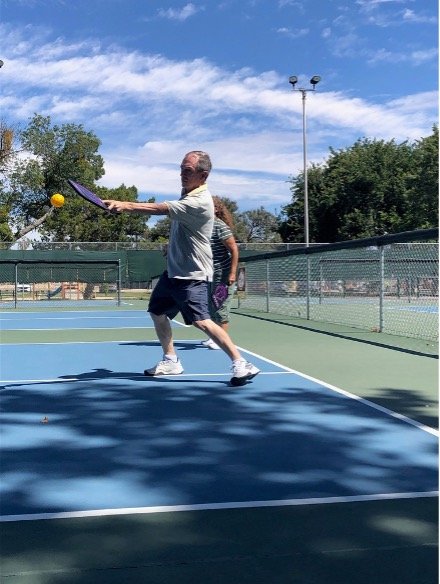
Members meet outside of their meetings to do activities like pickleball, stretching, boxing and line dancing.
“Since muscle rigidity is one of the core symptoms of Parkinson’s, exercise is essential for anyone living with Parkinson’s disease,” said Heike Lehnert-LeHouillier, an assistant professor at New Mexico State University who specializes in voice disorders related to Parkinson’s disease. “It may even slow down the progression of the disease, which is why many exercise-based treatment approaches like Lee Silverman Voice Treatment BIG help with some of the movement-related symptoms.”
According to the Parkinson’s Foundation, there are 90,000 new diagnoses in the United States each year. In New Mexico, an estimated 7,497 people live with PD.
One of the group’s main goals is to get word out a support group exists, so the Las Cruces community knows support is available.
“To make sure that we get everybody who has been diagnosed or has not been diagnosed to know they’ve got a place to come,” Ken Posey said, leader of PDSGNM.
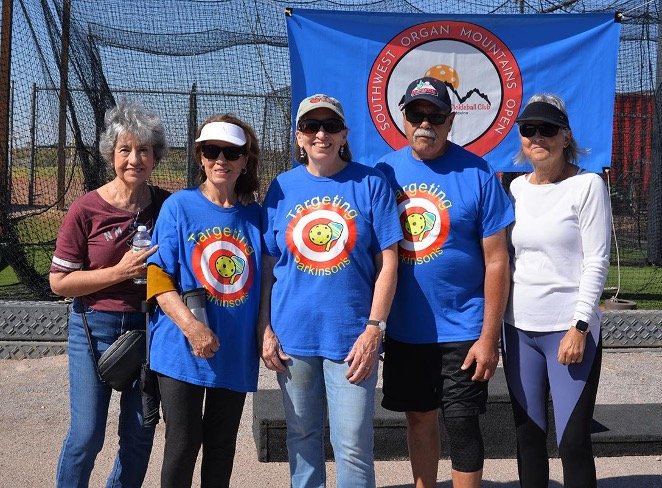
For many members, the emotional support is just as important as the physical benefits, offering connection and comfort in a disease that can feel isolating.
“Support groups for people living with Parkinson’s disease are very important for maintaining and forming social relationships,” Lehnert-LeHouillier said. “Support groups allow group members to share experiences with others who are in the same or a similar situation, which can reduce isolation and provide emotional support.”
“Great friends, they’re like family,” Stegall said. “They are the nicest people that have Parkinson’s, caring, loving, giving.”
For more information about PDSGNM, you can visit their website or contact group leader Ken Posey at 575-997-8828 or weimy65@icloud.com




 -
- -
- -
- -
- -
-