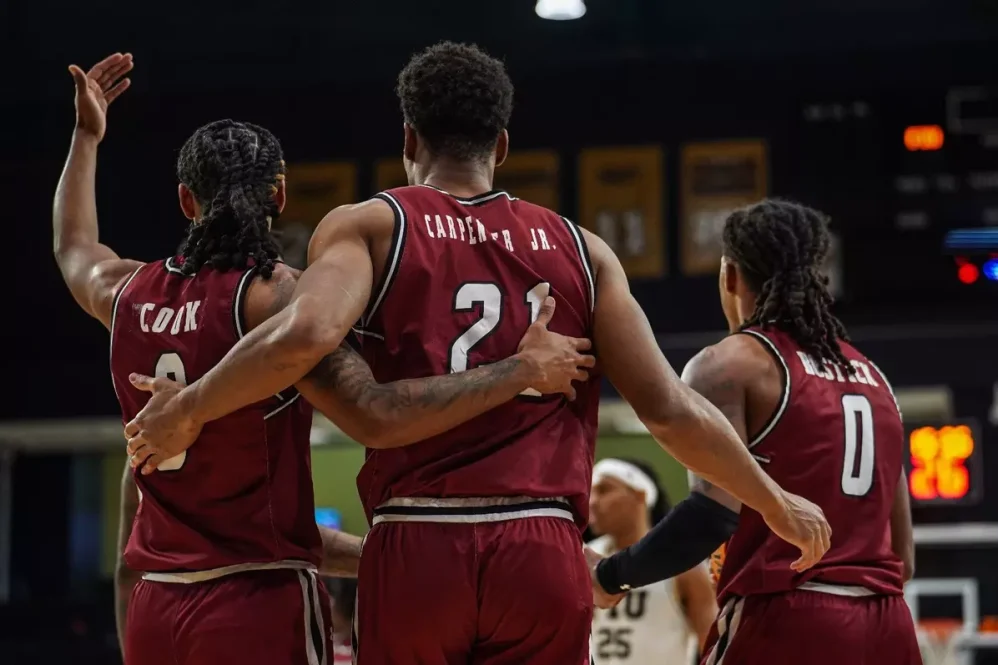
LAS CRUCES, N.M. — Hazing has long been a troubling factor in college sports, and New Mexico State University is now taking serious steps to prevent it. In the wake of a disturbing hazing scandal involving the 2022–23 men’s basketball team, the university has implemented a comprehensive anti-hazing initiative aimed at ensuring student-athlete safety and restoring the integrity of its athletic programs.
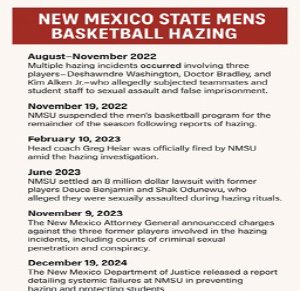
During the 2022–23 season, NMSU freshman basketball players Deuce Benjamin and Shakiru Odunewu came forward with reports of enduring months of sexual hazing. The accused players were Deshawndre Washington, Kim Aiken Jr., and Doctor Bradley. Following a lawsuit, Benjamin and Odunewu were awarded a combined $8 million.
A subsequent investigation by the New Mexico Department of Justice revealed that the hazing had persisted far longer than it should have. The report found the incidents occurred in harmful settings and highlighted multiple missed opportunities for intervention. It criticized the lack of clear enforcement of anti-hazing policies and attributed the toxic team culture to the leadership under then-Head Coach Greg Heiar. From the start of the season, the locker room environment was described as toxic, with coaches either unaware of or indifferent to the misconduct.
In addition to hazing, another incident eventually culminated in tragedy and caused some to question the culture in the athletics department. At the NMSU vs. UNM rivalry football game, NMSU basketball players Mike Peake and Marchelus Avery were involved in a fight with UNM students, which initially went unaddressed. Later, during a team trip to Albuquerque on November 19, 2022, Peake was lured by 17-year-old Mya Hill into a setup by Jonathan Smith, Eli’sha Upshaw, and Brandon Travis. Though Peake was struck with a bat and shot in the leg, he returned fire, fatally shooting Travis. This violent episode served as a turning point for the university.
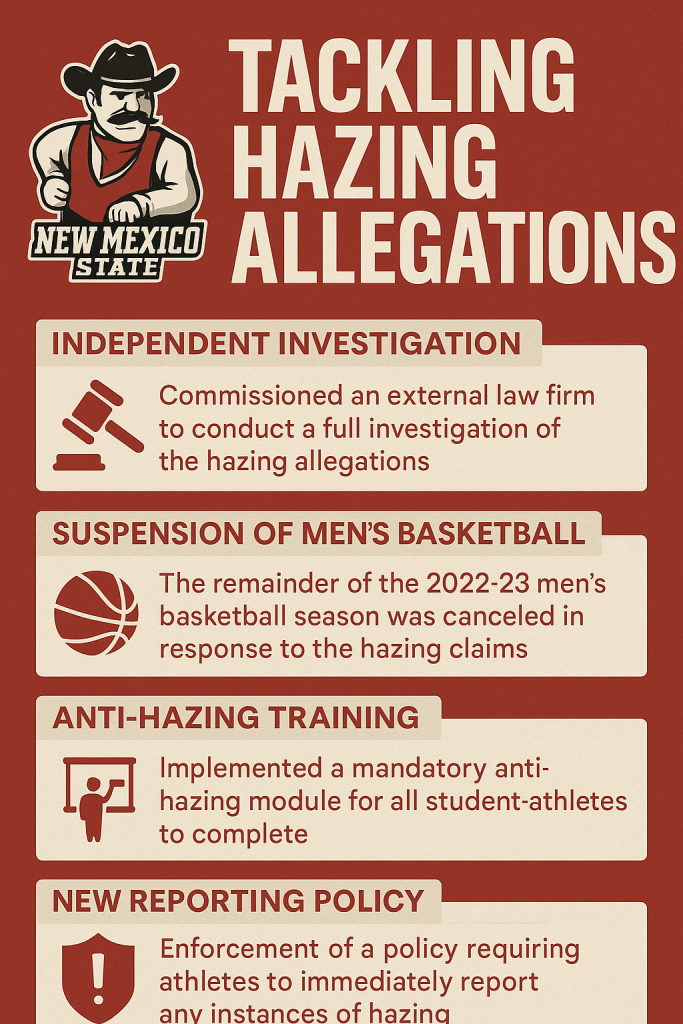
In response, NMSU took swift action by canceling the remainder of the basketball season and removing Head Coach Greg Heiar and his staff. In 2025, Athletic Director Mario Moccia was also dismissed for negligence and failure to address the toxic culture in athletics, of which hazing was a part.
In order to address the hazing part of the culture problems, NMSU introduced mandatory anti-hazing training for all athletes and staff, as well as hazing prevention education programs. These efforts are intended to create a safer environment for all student-athletes and to prevent future incidents.
The New Mexico Department of Justice recommended further measures, including:
- Enforcing disciplinary standards proportionate to the severity of infractions
- Establishing an outreach center focused on sexual violence awareness and prevention
- Requiring Title IX and anti-hazing training across the university
- Implementing written regulations for reporting hazing and sexual violence
These guidelines align with new federal requirements mandating anti-hazing programs at all educational institutions. Title IX continues to play a key role, protecting students from sex-based harassment and discrimination.
Despite the previous turmoil, the NMSU basketball program had seen success under former Coach Chris Jans, compiling a 122–32 record and three NCAA tournament appearances in five years. Now, with new leadership and policies in place, the university aims to rebuild its athletic department on a foundation of accountability and respect.
Acting Athletic Director Amber Burdge shared her vision for the future of NMSU athletics and pointed out the importance of building trust through regular communication with athletes.
“Daily touchpoints with student-athletes are essential to ensure they feel safe and heard,” Burdge said.
She also emphasized that the potential for hazing extends beyond just athletics.
“Anti-hazing policies in athletics are enforced the same way they are enforced throughout campus,” Burdge said. “75% of college student-athletes have experienced hazing, and 74% of fraternity and sorority members have encountered similar behaviors. These are the two populations we are always educating and addressing when it comes to hazing prevention.”
Burdge said that the vision for the future of the basketball program extends to all programs.
“My vision is for the entire athletic department: competitive excellence on the court, in the classroom, and in the community,” Burdge said.
Burdge also said that hiring coaches who embody Aggie values is critical to fostering a healthy team culture.
The university has implemented improved educational mechanisms to keep past events from recurring. The Dean’s Office and Conduct Office = introduced prevention and education programs for hazing.
“These are among the first lines of reporting support for student-athletes,” Burdge said. “It’s important they know there are multiple avenues—beyond just the athletic department—for reporting concerns about hazing, sexual assault, or other misconduct.”
While this current season has shown marked improvement in team culture and performance, the most meaningful progress is the absence of any reported hazing or sexual assault cases. NMSU’s anti-hazing initiative stands as a proactive step in protecting students and restoring pride in Aggie athletics.


 -
- -
- -
- -
- -
-